
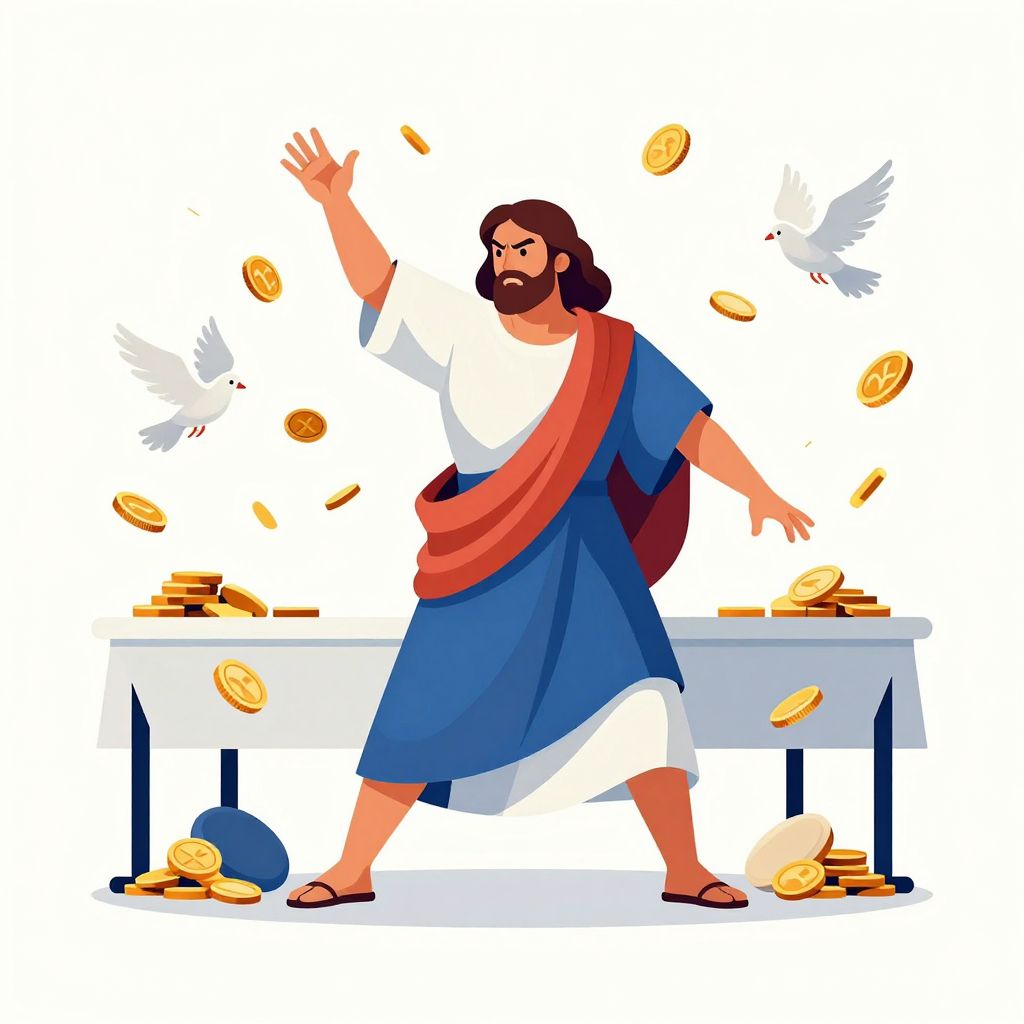
How does a gentle carpenter become a table-flipping revolutionary? Many grapple with the image of Jesus angrily casting out merchants and money changers from the temple. This spectacle raises a critical question about His mission and message. Jesus flipped the tables not just as an act of anger, but to reveal profound truths about worship, sacrifice, and the holiness of God.
Understanding why Jesus flipped the tables helps clarify His purpose and the kind of relationship He desires with humanity. It guides us toward a deeper appreciation of our worship and our lives as expressions of His love and righteousness.
Why Did Jesus Flip The Tables?
Jesus flipped the tables to demonstrate His rejection of corrupt worship practices and to restore the sanctity of the temple as a place of prayer. His actions called God’s people back to genuine devotion and away from transactional religion.
The Context of Jesus’ Actions
Jesus’ temple cleansing occurs during the time of Passover, a significant Jewish festival. The temple served as the center of Jewish worship. It was a place where sacrifices were offered according to the Law of Moses. Everything had an order, but that order was disrupted by commercialism.
During this festival, merchants sold animals for sacrifices, and money changers exchanged currency. These activities were essential yet had corrupted the purposes of the temple. What was once a place of worship transformed into a den of robbers (Jeremiah 7:11).
The Nature of Corruption
Corruption can infiltrate any sacred space. The essence of worship diluted, as profit replaced genuine reverence. Jesus’ action targeted not only the objects of commerce but the hearts of those participating. He sought to reignite a passion for authentic faith.
Consider your own life. Are there distractions that challenge your relationship with God? What obstacles might be keeping you from sincere worship? Reflect on how Jesus would respond to those blockages.
Jesus’ Role as a Prophet
Jesus’ temple cleansing aligned with the role of the Old Testament prophets. He acted out a prophetic call, challenging a fractured faith community. Just as prophets like Jeremiah and Isaiah confronted Israel, Jesus proclaimed a return to true worship.
His authority to act came from His identity as the Son of God. The prophets worked to bring people back to God, and Jesus did the same, emphasizing His role as the ultimate prophet.
The Symbolism of the Table Flipping
Jesus flipping the tables signifies a break from superficiality. The act symbolizes how human traditions can sometimes hinder true worship. It illustrates a divine rejection of what is impure and a call for genuine spirituality.
It’s vital to purify our worship. What are we bringing to the altar? Are we offering our best, or are we resorting to the spiritual leftovers? Examine the offerings you present to God each day — are they sincere?
The Fulfillment of Prophecy
Jesus’ actions fulfill scripture, as was seen when He quoted Isaiah 56:7, “My house will be called a house of prayer for all nations.” He reaffirmed God’s intention for the temple as a space for prayer and communion, not commerce.
Every time Jesus acts contrary to man-made traditions, He pointed toward the heart of God. It emphasizes God’s desire for connection over ritualistic duty. How does this truth resonate within you? Are your interactions with God sincere or merely habitual?
The Call to Holiness
By flipping the tables, Jesus challenges us to embrace holiness. Holiness invites us to live above our circumstances, reflecting God’s character. It compels the community of faith to pursue purity and authenticity.
Jesus does not merely expose the corruption; He calls Israel to return to purity in worship. This call remains true today. In what ways can you cultivate a personal holiness that reflects your faith?
Jesus’ Passion for True Worship
Jesus’ passionate response indicates how deeply He values true worship. His heart aches when worship devolves into routine or business. Worship should connect us to God, not become transactional.
He invites us into a relationship marked by love and sincerity. Are prayers few and far between? Do they feel more like a checklist than a dialogue? Redirect your worship this week by infusing it with vulnerability and honesty.
The Role of Community
Jesus’ challenge to purity also extends to community. Worship is a communal act, and when one segment practices poorly, it impacts the whole. The church, as collective believers, must strive for authenticity and unity.
Reflect on your role within your faith community. How can you encourage others toward sincere worship? How do corporate worship experiences help or hinder your spiritual growth?
The Dangers of Complacency
Complacency set in when ritual replaced relationship. Jesus urges us to combat apathy in our spiritual walk. Complacency can lead to a hollow faith, and no one is immune.
Stay aware of your spiritual temperature. What are you doing regularly to stoke the fires of your faith? Are there habits you can create to deepen your connection with God?
What Can We Learn from Jesus Flipping the Tables?
Jesus flipping the tables teaches essential lessons about worship, holiness, and faith. Embrace these insights as you consider how they translate into your life.
1. Respect for Sacred Spaces
Recognize and honor God’s presence in places designated for worship. Approach with reverence, understanding the deeper purpose behind rituals and community gatherings.
2. Engage in Genuine Worship
Worship should not be performance; it must be a heartfelt expression. Do not let your worship become a rote exercise. Genuine worship stems from a sincere heart.
3. Address Personal Corruption
Personal corruption can infiltrate our lives like it did in the temple. Regularly assess your motives. Are they aligned with God’s desires for your life?
4. Pursue Community Purity
Encourage your faith community toward authenticity. Challenge one another to ensure the church embodies Christ’s love without compromise.
5. Cultivate a Relationship with God
Your relationship with God is vital. Pray and seek His guidance earnestly. Avoid letting your spiritual life become routine.
Reflective Steps Toward Action
Take time this week to reflect on Jesus’ actions: separate time for personal worship. Ask God to reveal any areas of complacency. Recommit to genuine faith practices: prayer, study, and community outreach.
Conclusion: Flipping the Tables in Our Lives
In every part of life, Jesus’ example of flipping the tables emits an echo calling us back to truth. True worship encompasses authenticity, reverence, and passionate relationship. As you embrace His call, allow Jesus to challenge impure practices within your spiritual walk.
Consider issuing a prayer, inviting God to help recognize any blockages that inhibit pure worship. Jesus flips the tables to redeem our worship and our lives, creating space for connection within His love.
Explore more faith-based topics and articles to deepen your understanding and connection with God. For further insights on why Jesus flipped the tables in the temple, you may visit this resource. Delve deeper into Christ’s actions and their significance by checking this link as well.